
The Vienna engagement ring guide: what newcomers aren't told.
You've made the decision: you want to propose. But the moment you start looking for a ring, the advice piles up - and almost none of it is written for someone who just moved here. The four Cs, Instagram trends, salary-rule myths from a country you don't live in, and jewelers who assume you already know how things work in Austria.
Take a breath. Buying an engagement ring in a new country doesn't have to mean starting from zero. Here's an honest guide to finding the right ring in Vienna - including the local details almost no one bothers to explain to someone new here.
1. Forget the rules you brought with you
Forget the old idea that a ring has to cost a fortune to be "real." That's not tradition - it's a marketing invention from the diamond industry in the 1930s, and it didn't originate here any more than anywhere else. Nobody should start an engagement with debt. The only rule that actually matters: set a budget you can sleep soundly with. Once we know your direction, we'll get the absolute most out of it, by hand - that's a promise, not a sales pitch: Take a look at our engagement rings.
2. The ring comes second. The person comes first.
When you come to us at the atelier, we don't start by showing you a glittering display case. We ask about your partner instead.
How do they dress day to day?
Is jewelry worn as a bold statement, or kept quiet in the background?
Do their hands get put to hard use - at work, in the studio, at the gym?
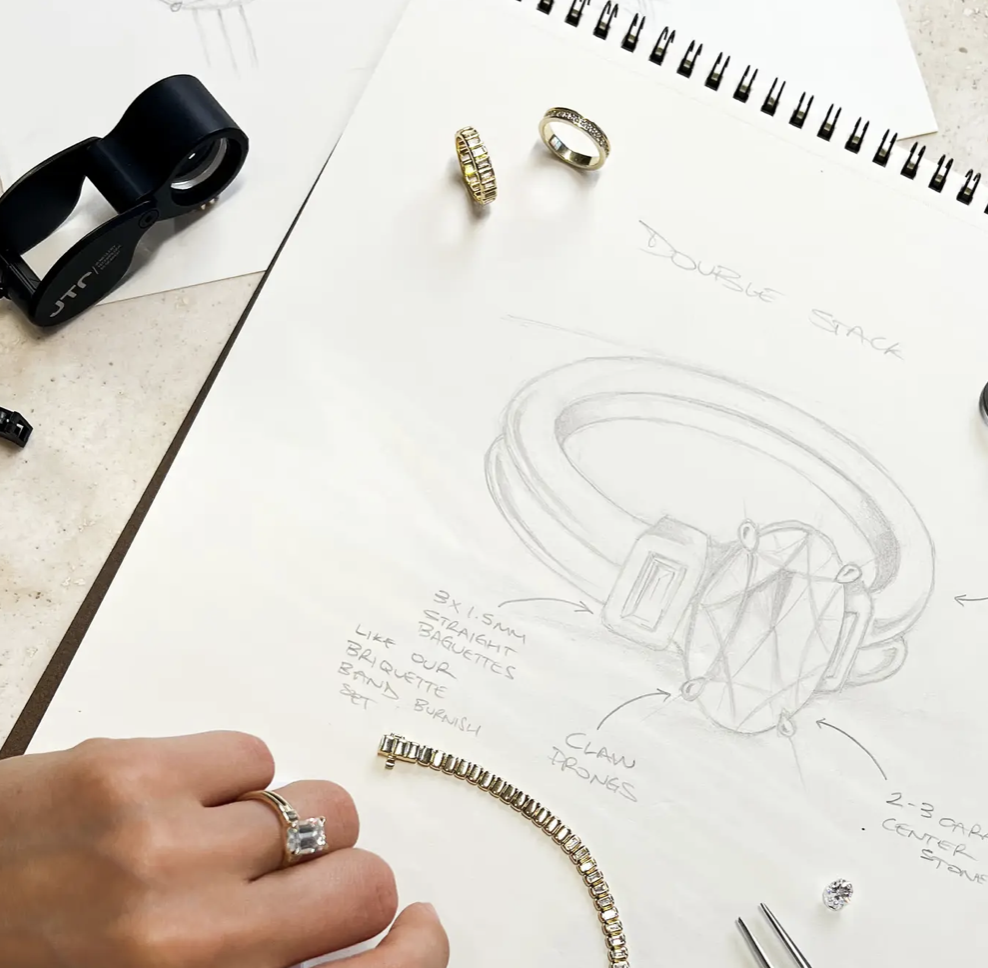
Sometimes you know the answers right away. Sometimes we work them out together. Either way, the result is the same: a ring that fits a real life, not a stock photo from a glossy catalogue.
3. A local detail almost no one explains to you
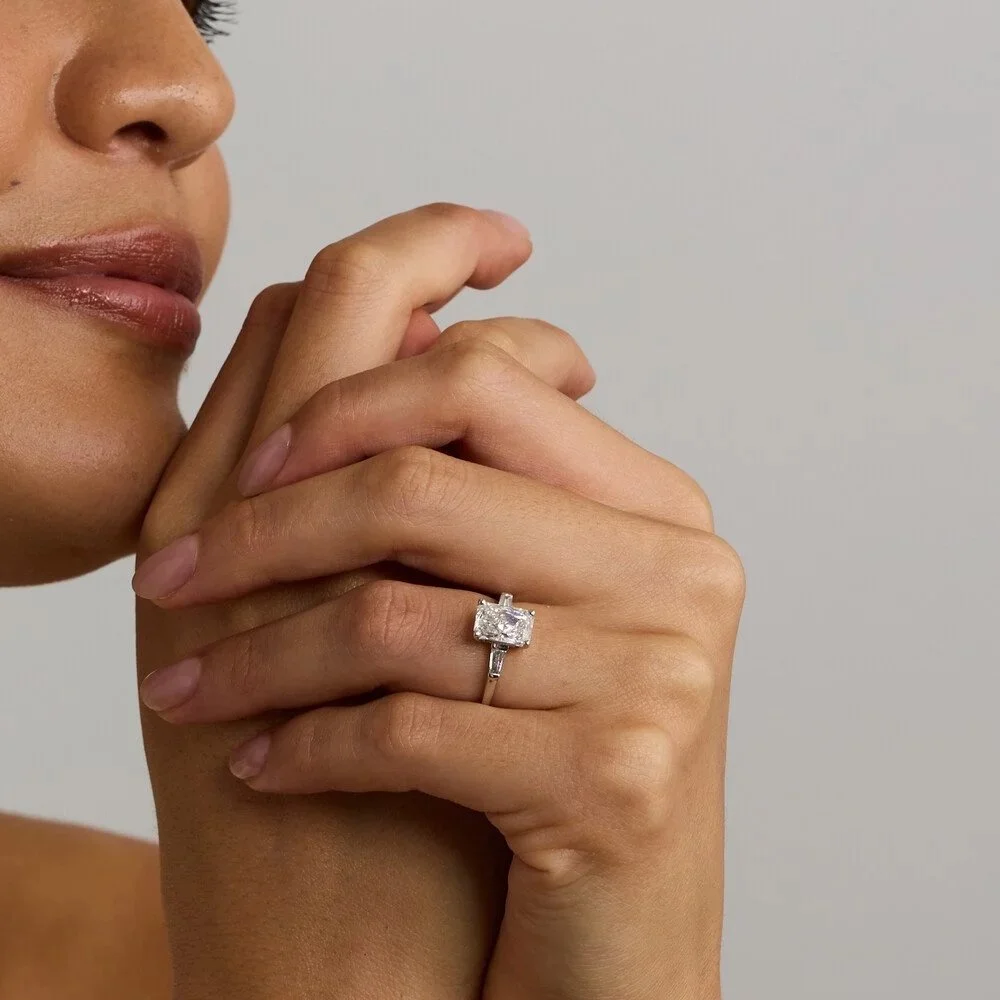
Here's something that surprises a lot of newcomers: in Austria (like in Germany and Switzerland), the engagement ring is traditionally worn on the left hand - same as in most countries you may have come from. But the wedding ring goes on the right hand, not the left. After the wedding, many couples also move the engagement ring over to the right hand, worn in front of the wedding band.
It's not a strict rule - plenty of couples here do it differently, and nobody will correct you at the standesamt. But it's worth knowing before you choose a setting, so the ring you fall in love with today still makes sense stacked next to another band later, on whichever hand you end up wearing it.
4. Everyday life beats the display case
A ring has to survive daily life, not just the moment of the proposal. If your partner works a lot with their hands or lives an active life, a tall, delicate setting will catch on everything within a week. For a low-maintenance lifestyle, a flatter construction - like an elegant bezel setting - is often the far more relaxed choice. A good ring doesn't just sparkle at the proposal. It holds up to everything that comes after.
5. Natural or lab-grown diamond?
With diamonds, you can endlessly turn the dials on cut, clarity, colour and carat. But today, the biggest lever for your budget is a different question entirely: origin. Natural and lab-grown diamonds are chemically, physically and optically identical - 100 percent. The only difference is how they were formed, and the price.
At the same budget, a lab-grown diamond usually means more carat and more brilliance. In the atelier, we lay both options side by side, under real light, with zero pressure. You decide which stone wins over your eye - the paper certificate ends up in a drawer either way. What matters is how it catches the light on the hand you love: More on how we source diamonds.
6. Think about the wedding band already
A classic first-timer's mistake: you buy a beautiful engagement ring, and two years later discover the wedding band doesn't sit flush against it because the setting is in the way. Think about this from the start, and plan a setting that can be stacked with a wedding band - or, later, an eternity band - without a second thought. It saves a real headache (and money) down the line, and keeps your options open as your story with this ring grows: Browse our wedding bands.
7. Plan for about four weeks
A mass-produced ring from a shopping street is ready instantly. A handcrafted, one-of-a-kind piece, built exactly around your chosen stone, takes a little more care and craftsmanship. Plan for roughly four weeks from the first idea to the handover, made entirely in-house - no middleman, no waiting on outside workshops. That way, the whole process stays relaxed, and full of anticipation instead of stress.
What do you actually need to bring?
Nothing but an hour of your time.
No local expertise, no perfect sketches, no decisions already made. Just the feeling that this is the right moment. We'll handle the rest together, at eye level - and yes, entirely in English, if that's easier for you.
One last thought: the person you love will wear this ring every single day. Not the certificate. Not a number on an invoice. Choose the piece you pick up and simply feel: yes. This one.
Ready for the first step?
Stop by for a coffee at the atelier. Relaxed, personal, and discreet - and yes, we're happy to talk this through in English.
Atelier Nowak — Hinterbrühl, near Vienna (by appointment)